
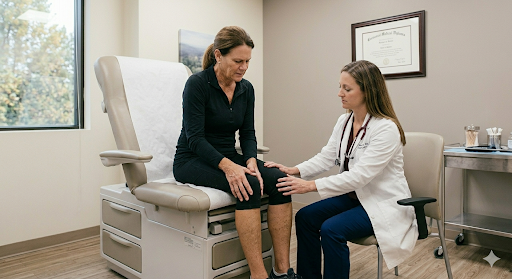
You rest the joint, ice it, take the anti-inflammatories, and the pain finally settles down. Then, a few weeks later, it is back in the same spot. If your joint pain keeps returning no matter what you try, the problem usually is not your effort. It is that the tissue underneath never actually healed. Rest and medication calm the symptoms, but they do not rebuild a worn cartilage surface or a loose ligament. That is where regenerative options like stem cell therapy and prolotherapy come in.
Why Your Joint Pain Keeps Coming Back
Most standard treatments are built to manage pain, not repair the joint. Pain relievers quiet the nerves. Rest takes pressure off the area. Steroid injections lower inflammation for a while. None of them fix the damaged tissue causing the trouble, so once the effect wears off, the pain has every reason to return.
Recurring joint pain often points to a structural issue: thinning cartilage, a strained tendon, or a ligament that has loosened and lets the joint move in ways it should not. Until that structure gets stronger, you stay stuck in a cycle of short relief followed by another flare.
What Stem Cell Therapy Actually Does for a Worn Joint

Stem cell therapy is part of regenerative medicine, an approach that harnesses your body’s own healing mechanisms rather than masking symptoms. In a typical procedure, cells are taken from your own body, concentrated, and injected directly into the problem joint. The goal is to calm inflammation and support repair in the surrounding tissue.
Researchers are still studying how much new cartilage these injections can actually grow. What patients more reliably report is less pain and better movement, which, for a joint that keeps acting up, can be a real change.
Stem Cell Therapy vs. Prolotherapy: Which One Fits
When prolotherapy makes sense
Prolotherapy uses a simple dextrose (sugar water) solution injected into a weakened ligament or tendon. The mild irritation triggers your body’s natural healing response, prompting it to strengthen that connective tissue over a series of sessions. It tends to suit joint instability and nagging tendon pain. A good prolotherapy clinic examines the joint first to confirm the problem is in the soft tissue.
When stem cell or PRP makes sense
When the trouble is more about the joint surface itself, options like stem cell therapy or PRP, platelet-rich plasma, are often considered, since they focus on the joint environment rather than a single ligament. The right choice depends on what is actually driving your pain, which is why a proper exam matters more than picking a treatment off a menu.
What the Research Honestly Says
The evidence for regenerative joint treatments is encouraging but still developing. Studies report real improvements in pain and function for many patients, while also noting that results vary from person to person and that these therapies are not a guaranteed fix. Stem cell treatments are still considered emerging and are regulated by the FDA. A trustworthy provider tells you this plainly and sets realistic expectations instead of promising a cure.
Are You a Good Candidate for Non-Surgical Pain Treatment?
You might fit non-surgical pain treatment if your joint pain keeps returning, if rest and medication only help for a while, and if you would rather avoid or delay surgery. People with knee, hip, shoulder, or back pain from arthritis, old injuries, or overuse are the most common candidates. The only way to know for sure is an evaluation, where a provider checks the joint and reviews your history before recommending anything.
Steps to Take Before the Pain Returns
Before your next appointment, try these:
- Keep a pain log for one week and note when the joint hurts most, what activities set it off, and how long each flare lasts.
- Swap high-impact activity for low-impact movement like walking, swimming, or cycling to keep the joint moving without overloading it.
- Use heat before activity and ice after it to manage flares while you wait for your visit.
- Gather any past imaging, such as X-rays or MRIs, along with a list of treatments you have already tried.
- Note how the pain affects your daily tasks, so your provider can see the full pattern rather than just one bad day.
Small, steady adjustments like these give your provider a clearer starting point and help target the source of the pain instead of masking it again.
If your joint pain keeps returning and you want a plan that addresses the cause, schedule a consultation with Doctors Clinic Amarillo to review your symptoms and explore whether stem cell therapy or prolotherapy is right for you.
Frequently Asked Questions
Is stem cell therapy safe for joint pain?
When it uses your own cells and is performed by a qualified provider, the procedure is generally considered low-risk, with soreness at the injection site as the most common side effect. Because it is still an emerging treatment, the best step is an exam to confirm you are a suitable candidate.
How is prolotherapy different from a steroid injection?
A steroid injection reduces inflammation for a short period but does not heal the tissue. Prolotherapy works the opposite way, prompting your body to strengthen the ligament or tendon over several sessions rather than just quieting the pain.
How long does it take to feel relief from regenerative joint treatment?
It varies. Some people notice changes within a few weeks, while others need a couple of months for the tissue to respond. Prolotherapy and stem cell therapy both usually involve more than one visit.
Does insurance cover stem cell treatment or prolotherapy?
Most regenerative treatments are considered elective and are often paid out of pocket. Coverage depends on your plan, so check directly with your insurer and ask the clinic for current pricing during your consultation.
Can these treatments help me avoid joint surgery?
For some people, yes. They are designed to address pain at the source, potentially delaying or reducing the need for surgery. They are not right for every joint or every stage of damage, which is why an evaluation comes first.